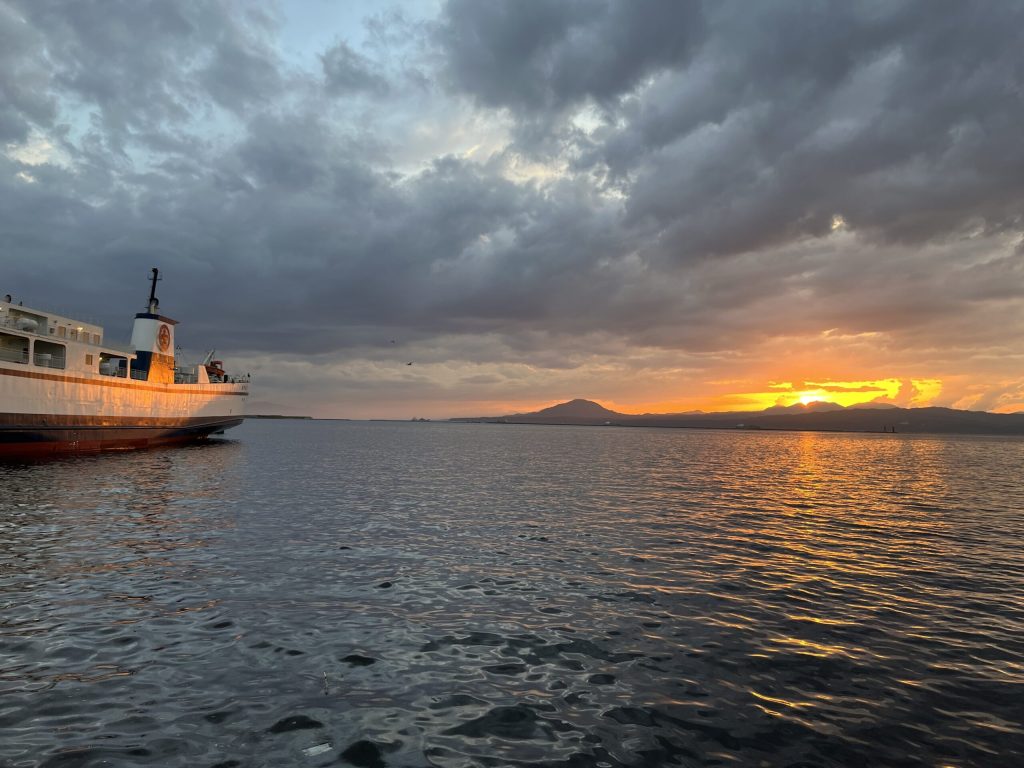
“Konichiwa”, the staff behind the desk at Aomori’s ferry terminal greet us with typical Japanese alacrity. It’s 7 a.m. and we feel utterly exhausted. Having driven over 700km from Tokyo’s Narita airport over the past couple of days to make it this far, it is perhaps inevitable. We quickly fill our embarkation forms and shuffle back to the car. Onboard everything is scrupulously clean, something which we have come to expect in Japan. We pick our seats and promptly venture out onto the deck. The sea is calm under the azure sky. The sun is shining and the temperature, surprisingly pleasant. We are on our way to Hakodate in Hokkaido, the northern most island on the Japanese Archipelago.
Although it is only a leisurely 5 hours on the ferry from Aomori, Hokkaido feels like another world. The endless forests and sparkling volcanic caldera lakes reflecting the limitless sky and tall mountains, are a far cry from the busy metropolis of Tokyo. Home to the indigenous AinuAinu people, Hokkaido has a fraught history. It was forcefully assimilated into the Japanese nation state in 1896. Only in 2019 was a new act passed, legally recognising the AinuAinu as the indigenous people of the island.
Our road trip here will eventually take us all the way to the remote Shiretoko peninsula, on the northeastern corner of this vast island. In the local AinuAinu language, this area is known as ‘the end of the world’ and one is arguably closer to Russia here than the Japanese mainland.
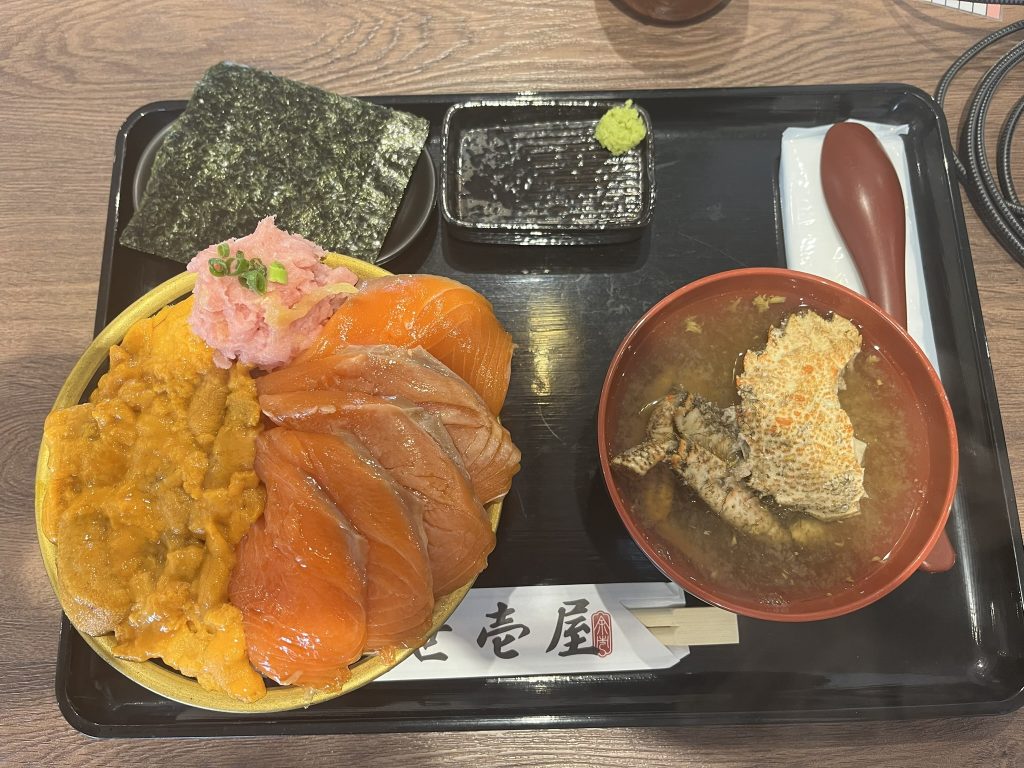
Of course our imaginations have gone somewhat ahead of our physical bodies; as we dock at Hakodate our stomachs protest the early start and on-the-run breakfast and we decide to stop for some much needed sustenance. It’s mid day and we feel utterly famished. At a local establishment we feast on freshly caught regional delicacies such as sea urchin, sable fish and sweet shrimp.
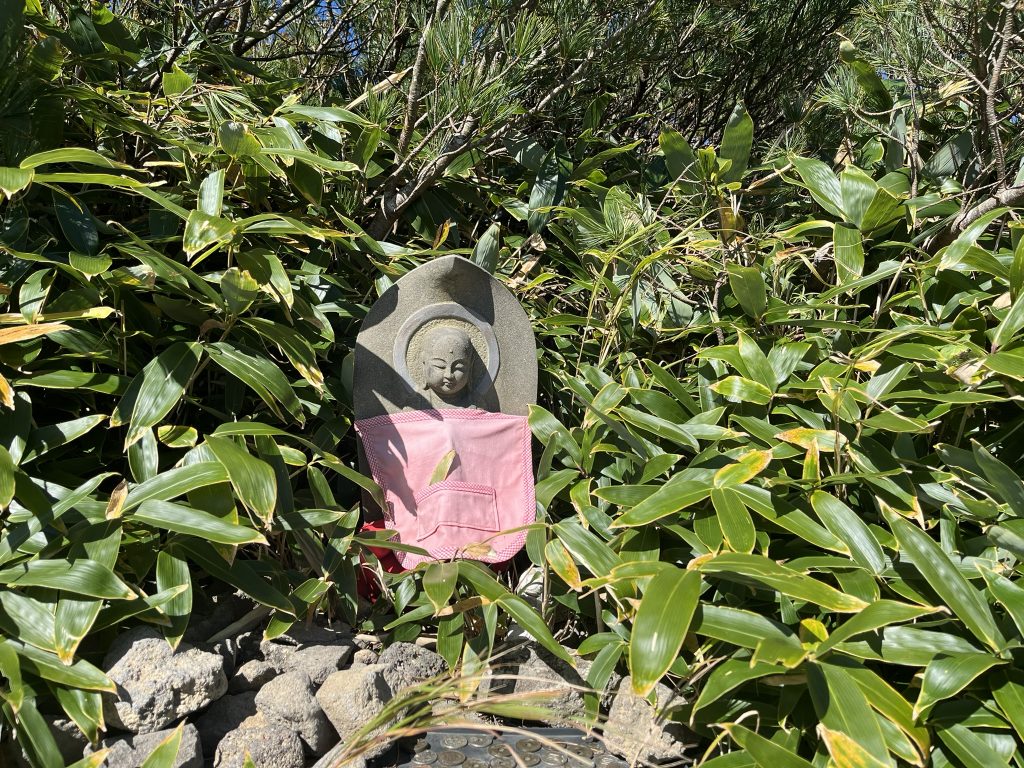
Hunger thoroughly sated, we decide to use our renewed energy and vigour to hike up to the summit of Mount. Hakodate, the first peak you see when you dock at the port. The tree lined path, gentle undulating landscape and the sunlight filtering through the leaves above make for perfect walking conditions. Continuing along the trail, we pass several charming shrines – a familiar sight while walking in Asia. As an avid hiker, it makes me appreciate how mountains are often shaped over time by human practices, beliefs and values.
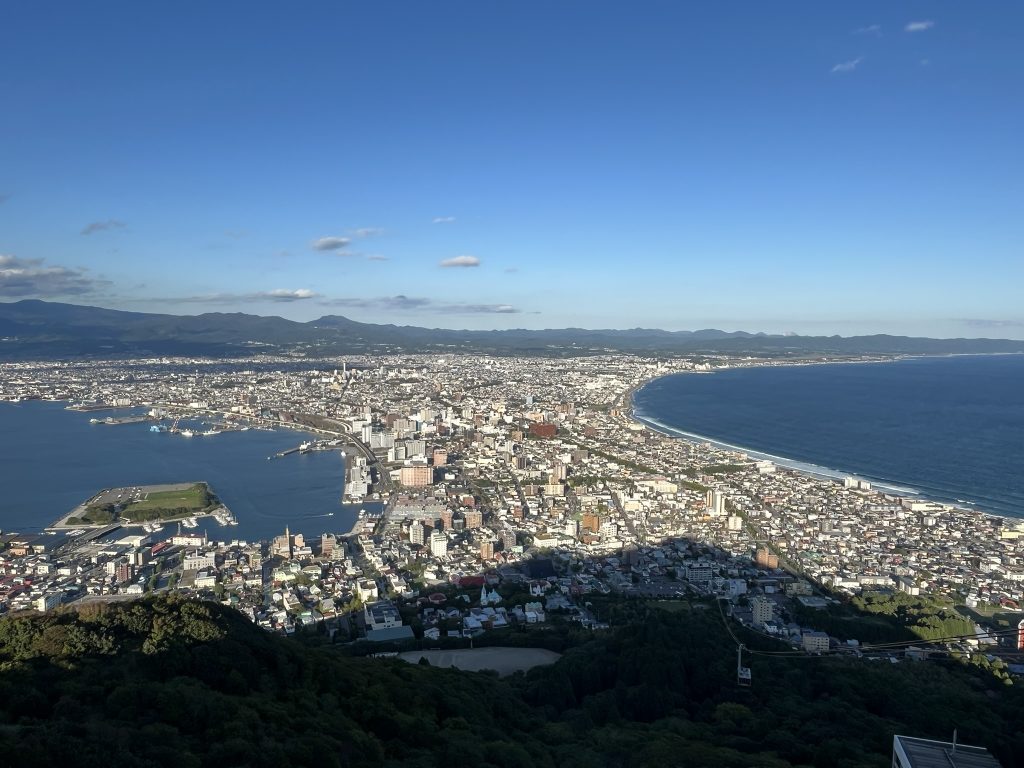
The summit offers us an unimpeded view of the bay below, a burgeoning city nestling at its feet and the distant mountains beyond. We bask in the sunshine like a couple of cats and slowly meander our way back to town taking a slightly different route.
Having made the descent from Mt. Hakodate there is just enough time to grab a coffee before we hit the road to Lake Toya – our rest stop for the night and starting point for kayaking tomorrow.
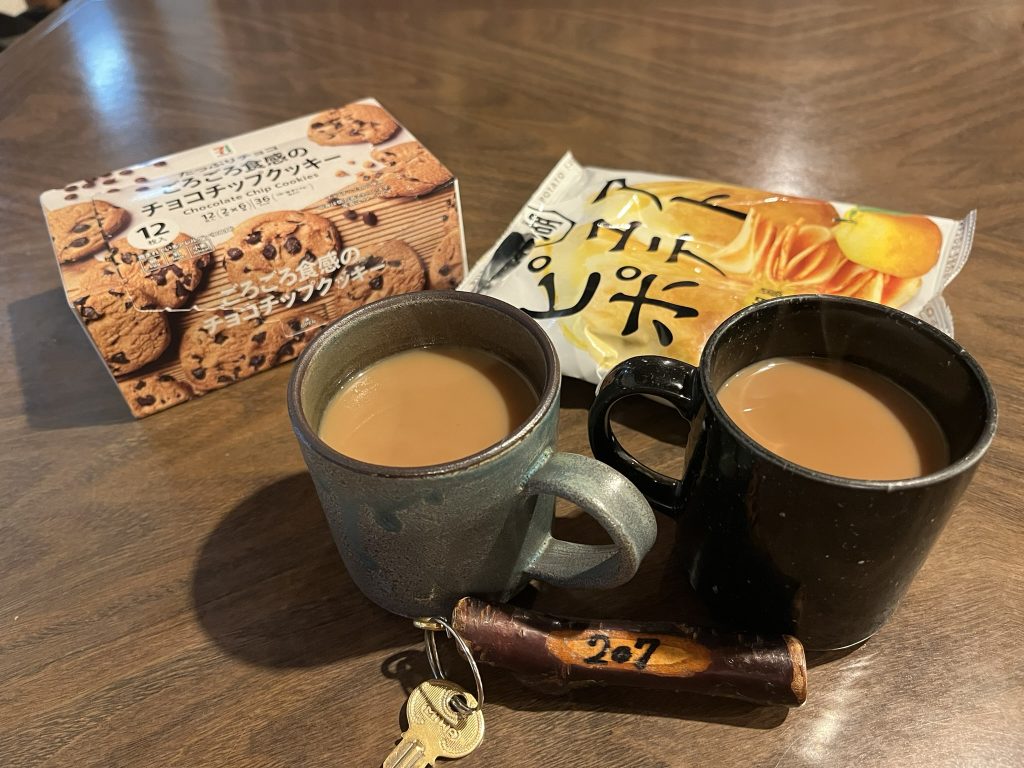
The following morning, rays of early sunlight dance off the shimmering surface of lake beyond, coaxing us out of our accommodation and around the North road to a small bay. Armed with a flask of tea and a local variant of McVitie’s digestive biscuits, we watch the gentle waves as they lap the shore. Lake Toya is serene and deliciously inviting. Our plan is to kayak to the Nakajima island in the middle of the lake, explore the place at a leisurely pace, quaff some tea and head back to the shore.
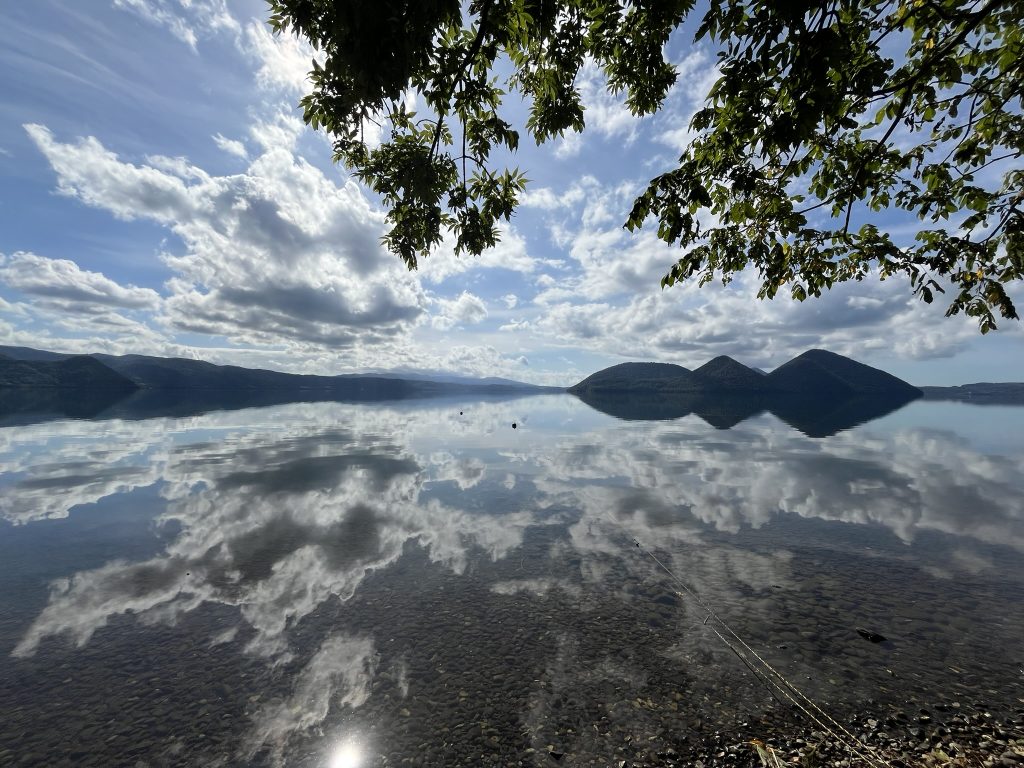
Unfortunately, the wind gets up during our journey and we’re forced to abandon the crossing. We valiantly battle the waves to return to shore and beach our kayaks. Finding a sheltered spot by the jetty, we warm ourselves by sipping hot tea. Our escapades remind me of the delightful characters from Enid Blyton; children who were always off adventuring somewhere fun. I jovially quip to myself, “all we need is Kiki the parrot to complete the picture”.
It’s nearly time to drive to our onsen hotel on the banks of Lake Shikotsu. It is a short drive, which enables us to chill out more along the way. We stop to get washing done at a coin laundry, grab a coffee and purchase some vernacular pottery and ceramicsvernacular pottery and ceramics from local artisans.
As someone who sees immense beauty in the telltale marks of hand tools, cracks and patina, I am thrilled to find a small selection of antiques and vintage items for sale. While selecting a few pieces to buy, I can’t help but admire the wabi-sabi aspect of the Japanese aesthetic. Wabi-Sabi encapsulates Japan’s deep cultural sensitivity to the brevity of life, its imperfections and ephemeral nature – a wise reminder to savour the present.
Our hotel is situated in a woodland and it promises to be the perfect base to go hiking in the surrounding mountains and forests, or canoeing on river Chitose. Warm from using the onsen, I gaze at the herds of Ezo deer as they graze nonchalantly in the voluptuous gardens, while the rain softly patters on the roof.
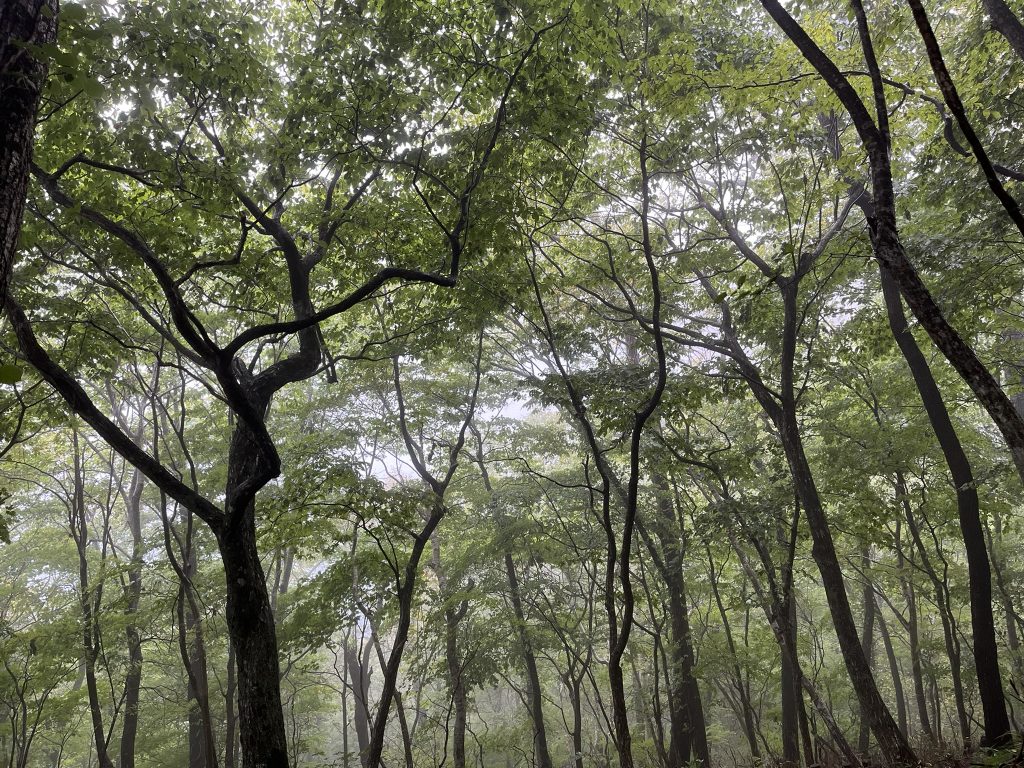
From our breakfast table the following morning, the amateur ornithologist in me is delighted at the sight of woodpeckers, nuthatches and various species of tits. It’s raining heavily, so we decide to explore a dense woodland trail, hoping the canopy of myriad trees will shelter us.
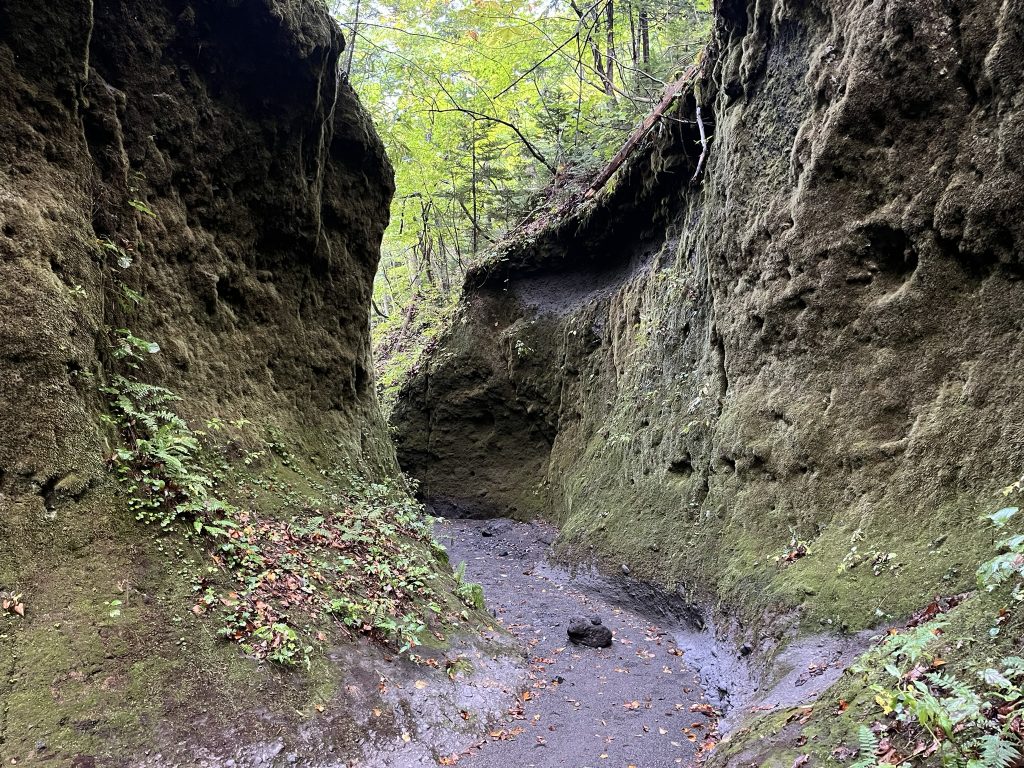
To the South of Lake Shikotsu is a rather special natural wonder, a moss corridor. Carved from rock and earth by a seasonal watercourse, in the summer and autumn months this corridor is dry for walking. A rich range of moss and lichen grow in abundance on the rock walls thanks to the clean air and rain of this region. As we proceed on the trail, we realise we are the only souls in the silent forest. We haven’t seen a single hiker. We feel truly privileged to be able to enjoy this special place in such peace and tranquillity.
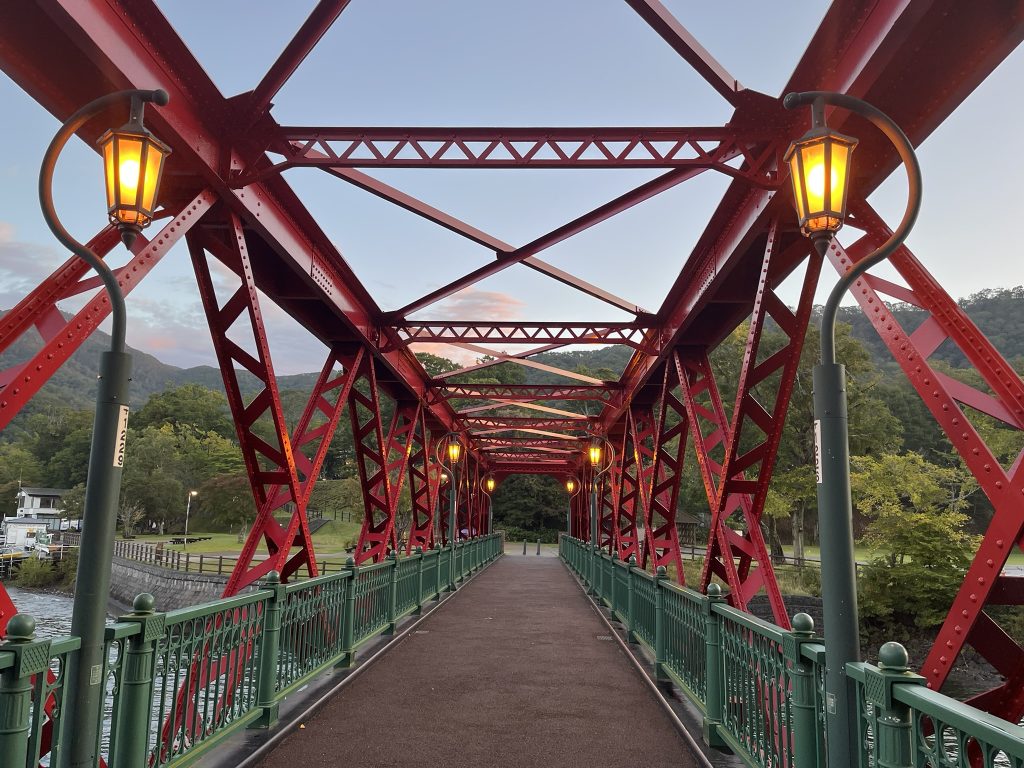
We awake the next day to beautiful morning light – the herald of a bright, clear day. On a hiking trip, one can’t beat a good sunrise after a day of rain and cloud.
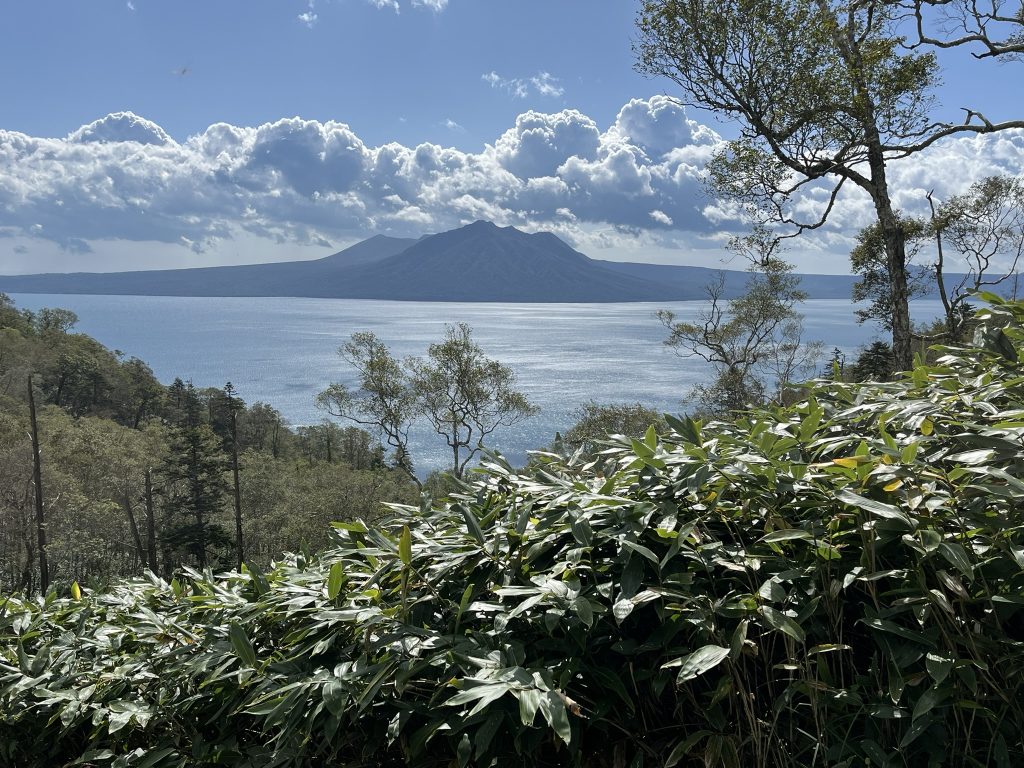
We make an early start to reach the trail head of our first hike of the day. Hiking on a well maintained path to the summit of Ichankoppesan, the sound of the tinkling bear bells alerts us to the presence of fellow hikers on the trail. We rapidly gain height and are rewarded with a sterling view of Mount Eniwa billowing plumes of smoke, as a slight hint of sulphur lingers in the air.
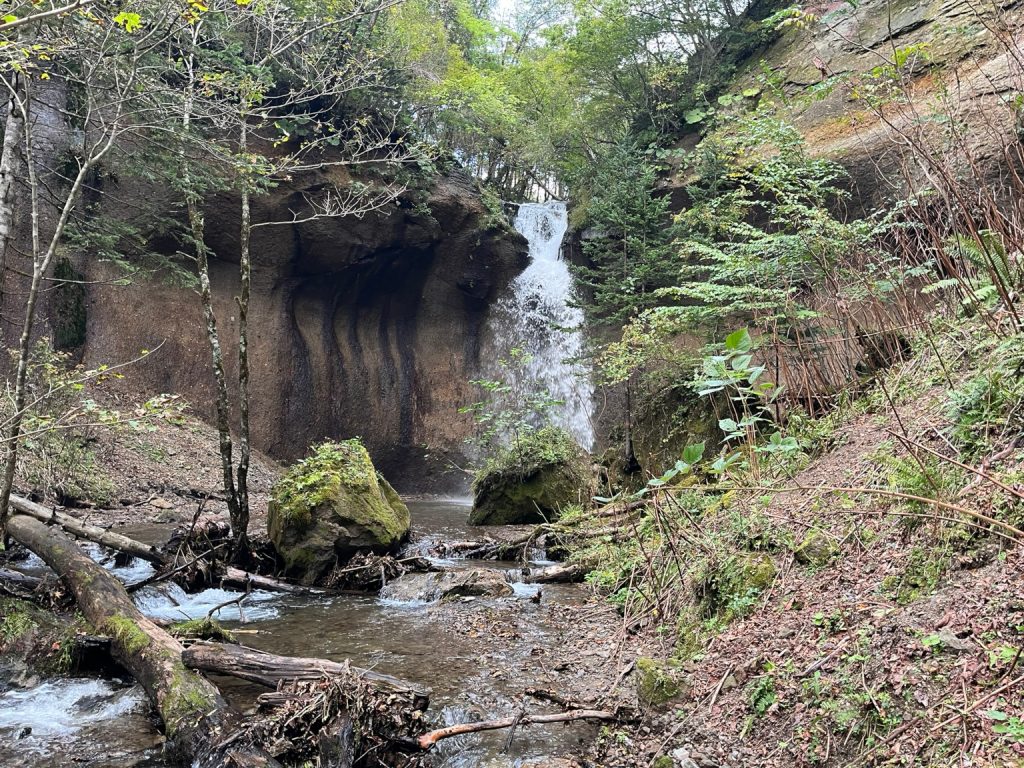
During the afternoon, we hike along forestry tracks and negotiate a rather tricky descent to the river bed at the foot of the Schichijo Waterfall. The cascade of water pouring over the rocks throws up a cloud of mist, providing a stunning end to our time in the wilds of Lake Shikotsu.
We have taken to driving at night here. The roads are easy to navigate in the dark with little traffic to speak of and it frees up the days for us to explore the natural environment properly. Accordingly it is after sunset that we head out onto the winding mountain road towards the Daisetsuzan National Park and we arrive at our accommodation not long before staff are turning in for the night.
Originally we planned on being at Daisetsuzan much earlier in the day and hike Mount Kurodake, however the weather in the area was forecast to be dire during the day, so it made sense to stay on for the day at Lake Shikotsu and take advantage of the emerging sunshine there for hiking.
It’s tempting to get frustrated sometimes when travelling, especially when one has to change well made plans, but you realise that by just letting things be and enjoying whatever is right in front of you, nature finds a way to give you a stellar experience every time.
After a restful night’s sleep in Sounkyo onsen, we wind our way to the Lake Shikaribetsu region of Daisetsuzan National Park. The scenery is ethereal and dramatic. Mountains and forests full of trees. A few bare, but most beautifully burnished by the onset of autumn.
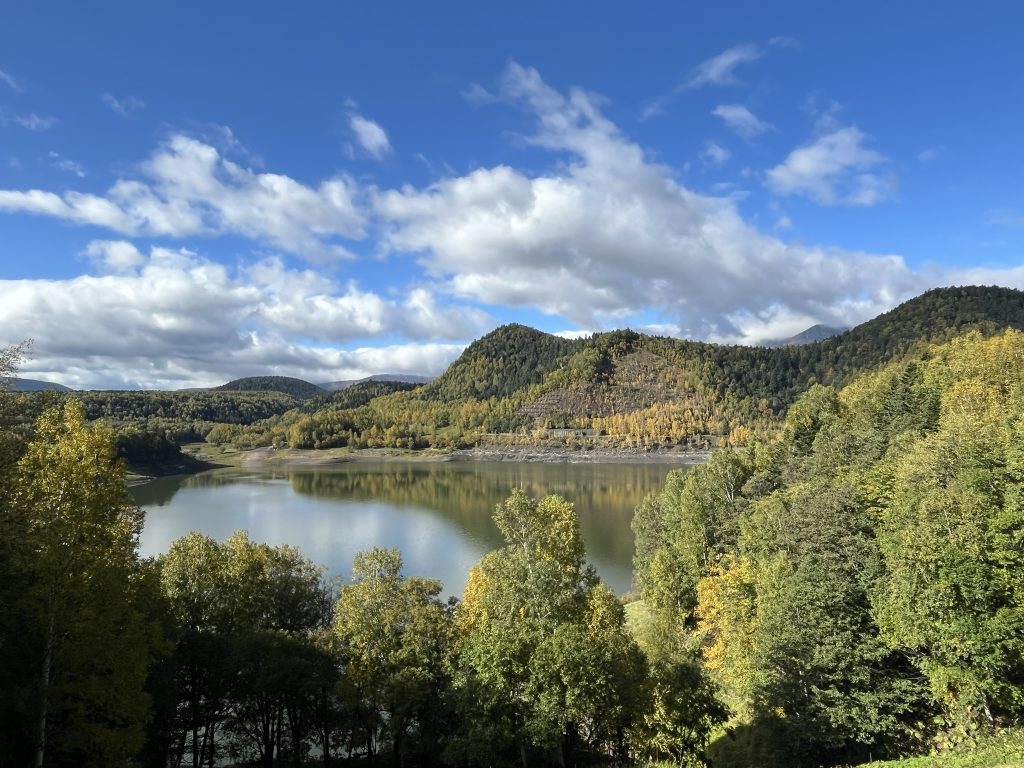
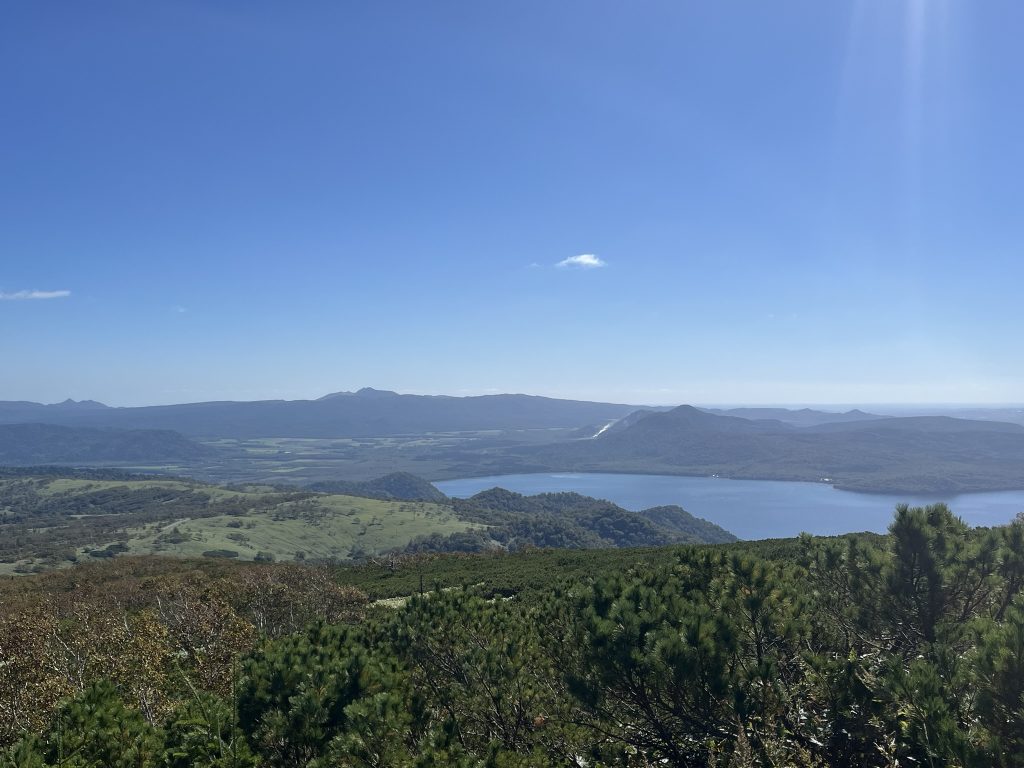
In Shikaribetsu, boat hire proves to be a non-starter, so we set off to hike a nearby peak instead, in the hope of getting a good view of the lake from above. We battle through the bamboo undergrowth on sections of the trail to reach the summit marker of Mt Minami-Petoutoru. A spectacular view of Lake Shikaribetsu and other peaks of Daisetsuzan greet us when we clear the tree line – a very well earned feast for the eyes.
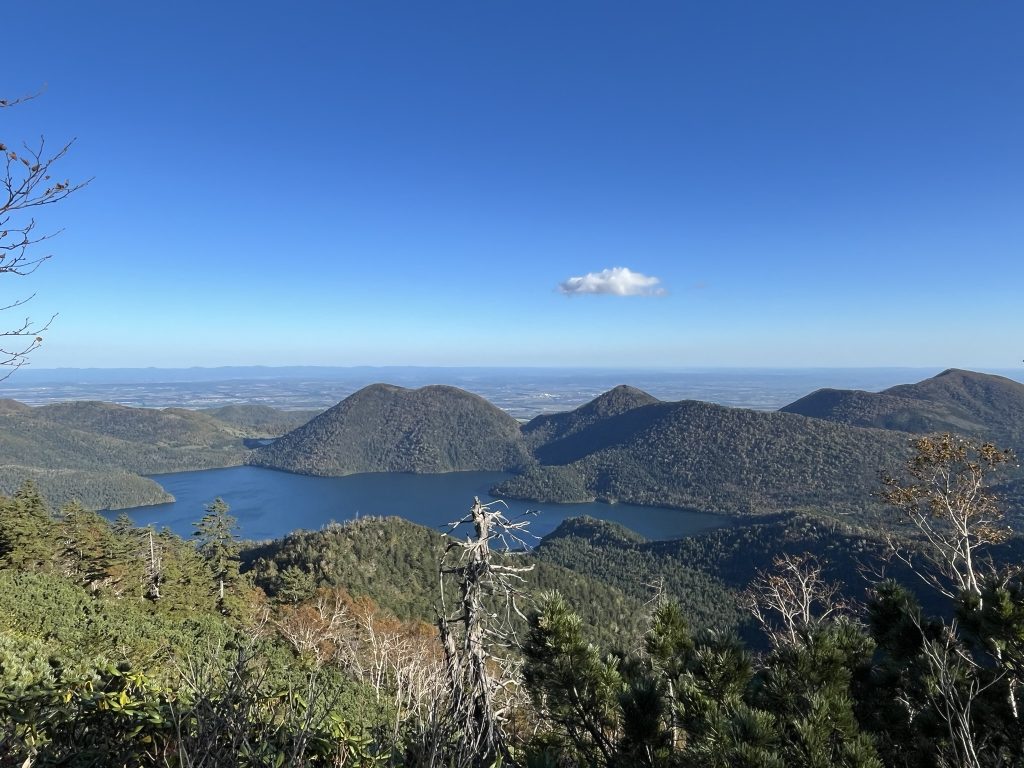
We regain our car once more as we complete our descent and prepare for our onward journey to ‘the end of the world’. Leaving the Daisetsuzan national park the mountains give way to rolling farmland and as the sun sinks below the horizon, we reflect on a day well spent on the trail.
After nearly 5 hours of night driving, we arrive in the small coastal town of Shari, on the outskirts of the remote Shiretoko National Park. We relax in the toasty onsen with views over the Sea of Okhotsk. The harbour lights twinkle in the foreground as the hot water soothes away the remaining vestiges of a long day. Afterwards there are complimentary pots of ubiquitous instant noodles, as well as freshly brewed tea and coffee to wash it all down. We enjoy all that’s on offer.
Starting the following day right with a local blend of coffee, we learn that majority of trails in the Shiretoko National Park are currently closed, primarily due to high levels of bear activity and a resulting fatality just over a month ago. The bear is such a ubiquitous symbol of Shiretoko that the animal is depicted on the specially commissioned drain covers for the area!
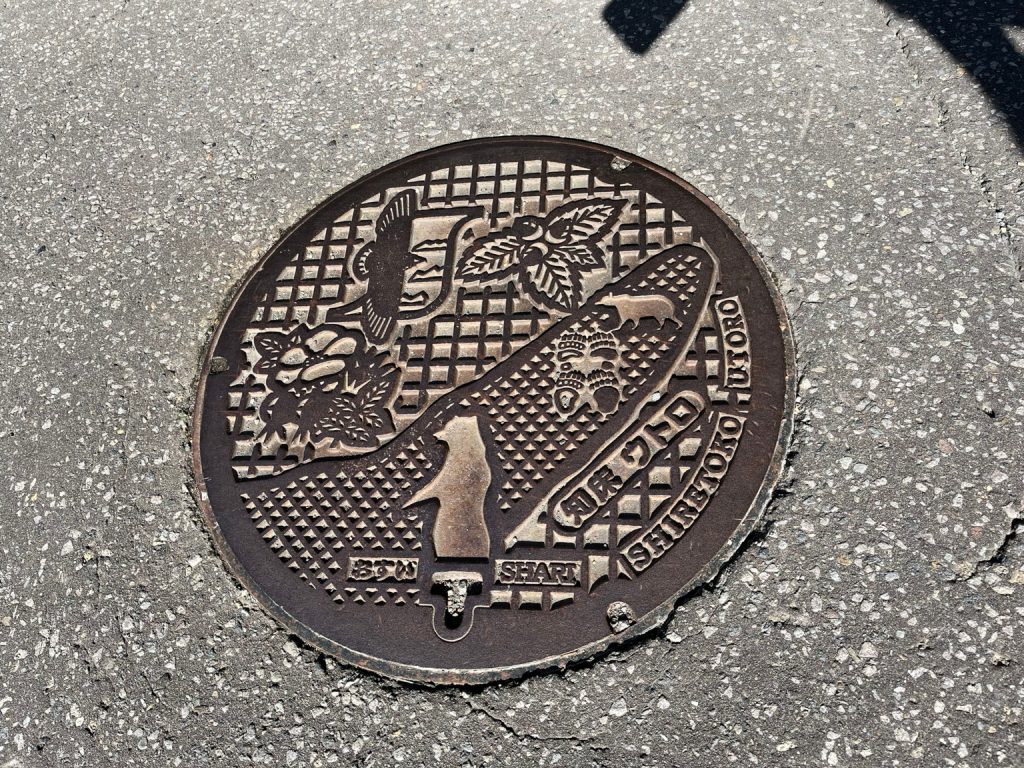
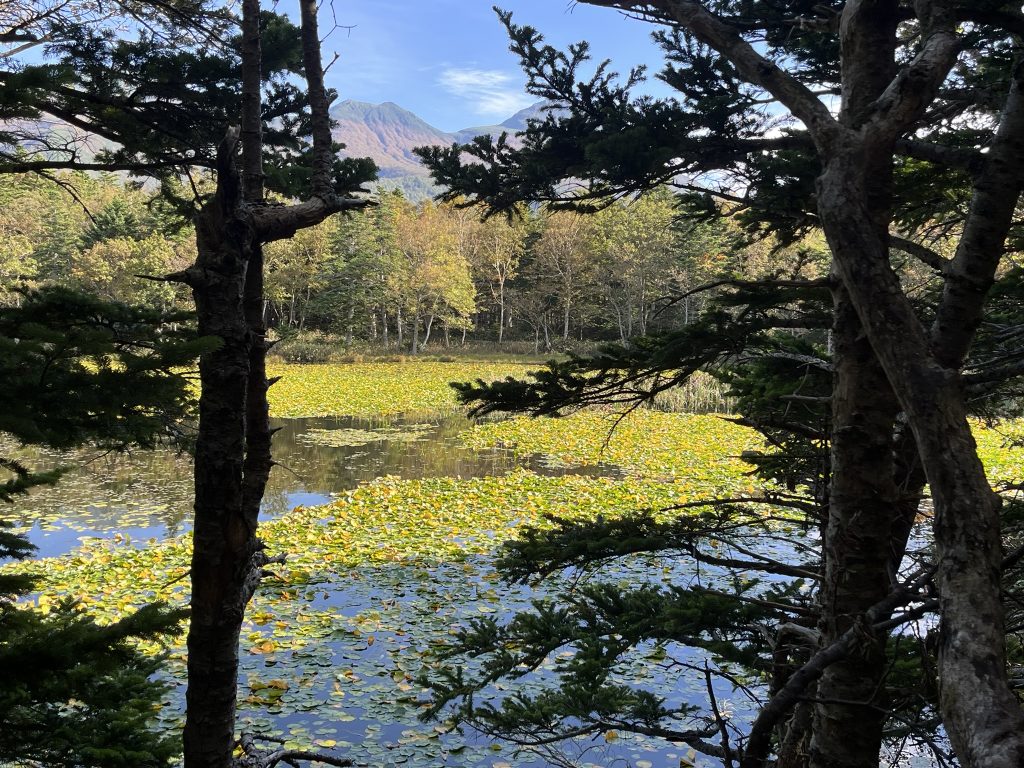
We decide to work our way through the park nonetheless, seeing as much as we can while we do so. One of the finest things to see here are the five Shiretokogo lakes. Pools of water dotted with lily pads faithfully reflect Sakhalin firs, Mongolian oaks and Jezo spruces of the primeval forest. Stopping now and then to admire the breathtaking views, we earnestly listen to the sounds of the forest. From the other side of a wide lake, we observe a female bear and her cubs foraging for food. We almost don’t see them as their camouflage is so good against the dark forest, but their scratching at the ground for ants and grubs gives them away. It’s a magical sight to behold.
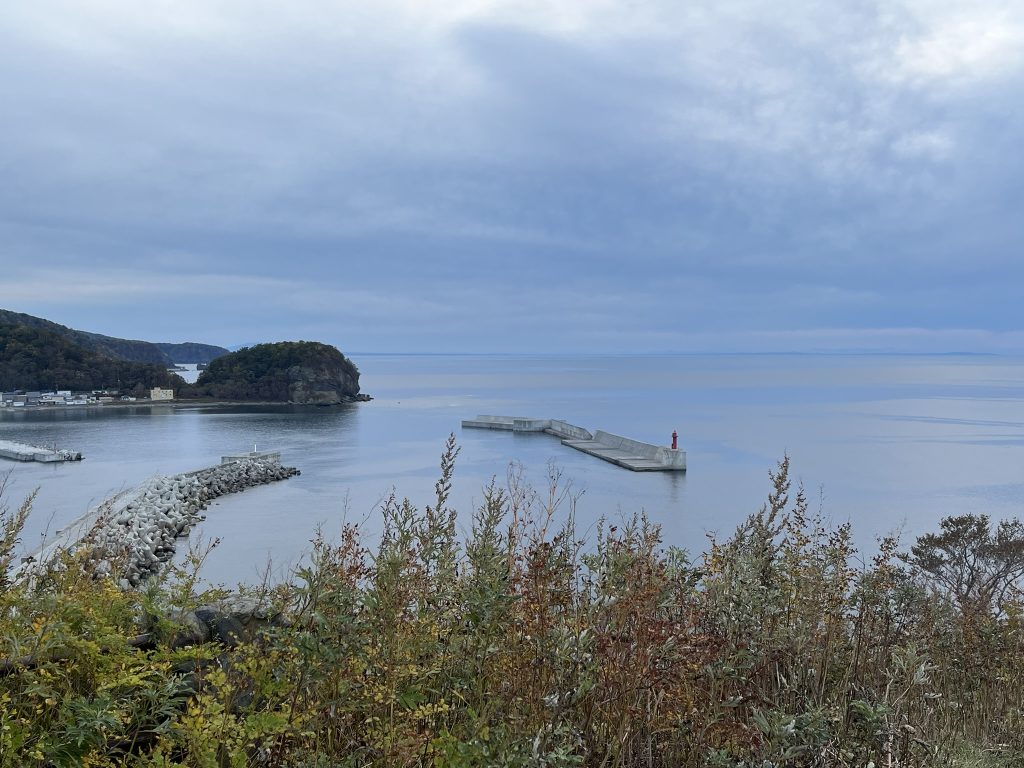
Later in the evening, we watch the sun set from Orunko Rock. In front of us is the endless Sea of Okhotsk, stretching out in the distance beyond, towards Sakhalin Island in Eastern Russia. Captivated by the enchanting vista around me, I try to imagine how this landscape transforms itself each winter, shrouded under a blanket of drift ice. My febrile mind conjures up vivid images of untrammelled beauty and simplicity of winter landscapes, depicted by Masters such as Hiroshige and Hokusai in the ukiyo-e genre of Japanese woodblock prints.
It is still early for dinner, so we wander back into town and decide to visit a few Ainu artisansAinu artisans. The master craftsmen remain firmly devoted to their ancient craft of wood carving to make a living. Sitting in a small workshop, we watch with amazement as a simple piece of wood is deftly turned into a pair of chopsticks. With the help of an unassuming penknife (makiri), it is adorned with traditional Ainu motifs (river, eyes, scales, swirls), passed down through generations. As I rub my hands along the indentations made in the wood, I acknowledge inwardly that this is far more than a decorative object. It is deeply symbolic of the Ainu culture and Japanese folk art. Originally hunter gatherers, for the Ainu their craft is representative of the reverential bond they share with nature. To learn a livelihood as a carver or a weaver, one needs to train for a decade, which can be a challenging period for young Ainu.

Searching for a dining establishment in Japan is quite an easy task to accomplish owing to the fluttering Tenugui clothsTenugui cloths hanging down over the doorways. These are traditionally used as hand towels, but in modern Japan are employed in almost any setting, from welcoming displays in shop doorways to artwork on walls. It is also commonplace for these hangings to be in keeping with the season – it’s early Autumn in Hokkaido and we delight in the rich red and brown colours of the Tenugui we see.
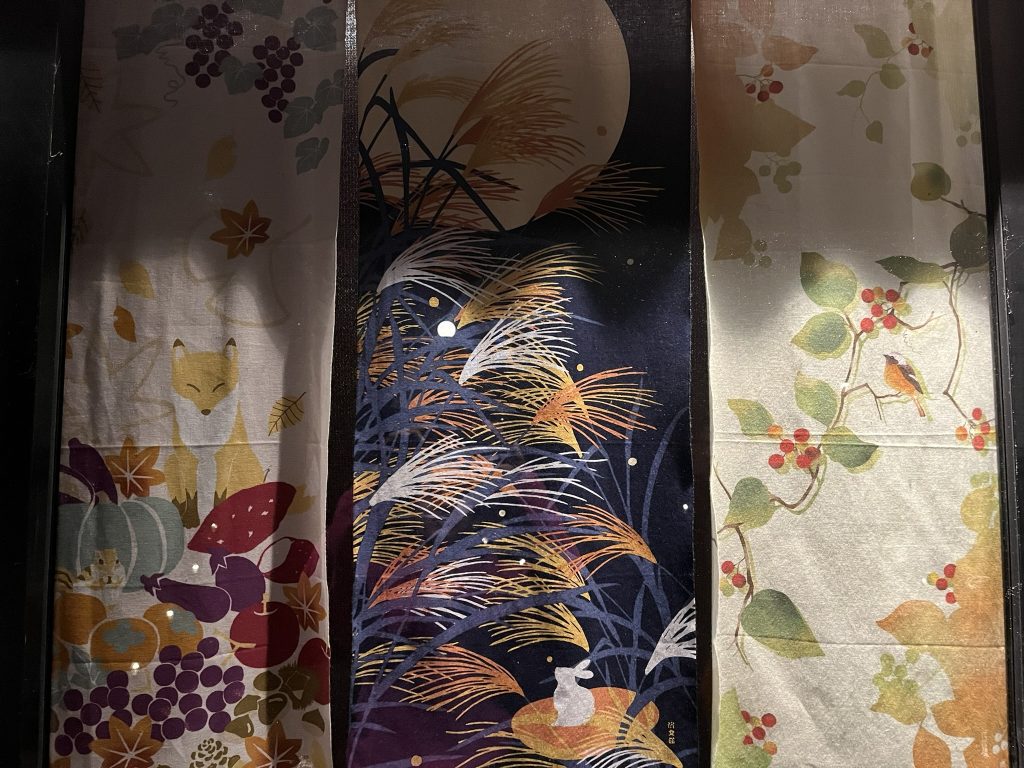
We are welcomed into a small cosy restaurant, run by a husband and wife team, who prepare a delicious meal of locally caught fish, sashimi style. We are the last customers of the day and thank them for such wonderful food and great hospitality. Their smiles stay with us as we walk back up the hill to our hotel and turn in for the night.
In the soft light of a new dawn, we feel fortunate to have allocated a couple of days to exploring the Shiretoko area. While many trails are indeed closed, we’re still able to use our map, explore and find some true gems.
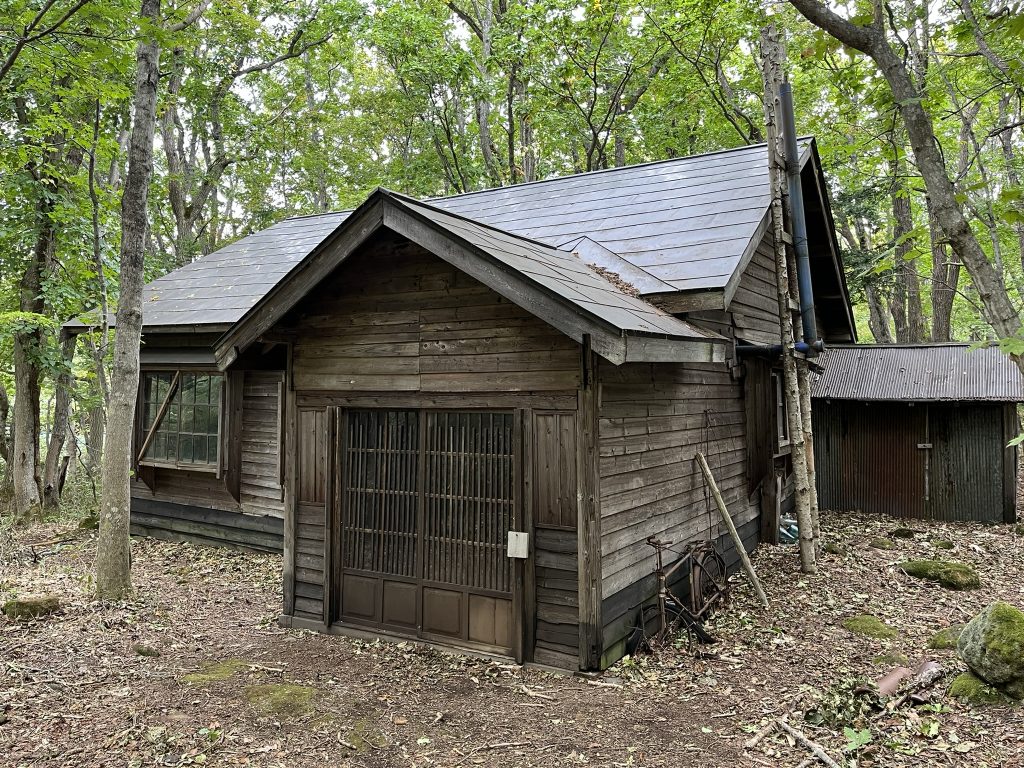
The highlight of the morning is our walk through a woodland trail without a single tourist in sight. In a thick tapestry of varied greens, we stumble on an abandoned farm house, built in traditional style. What is incredible about this property is how perfect everything still is – as if the owners departed one morning intending to come back for dinner and just never returned. The bicycle left propped up against the side of the house, the slippers still in the shoe rack inside the door, tea set on the table by the wood burning stove and kitchen utensils with consumables neatly stacked on shelves visible through the kitchen window. A hauntingly beautiful moment in which we are seemingly able to peer back through time. We wonder what had became of the couple who lived here, leaving even their two tooth brushes in the glass by the window.
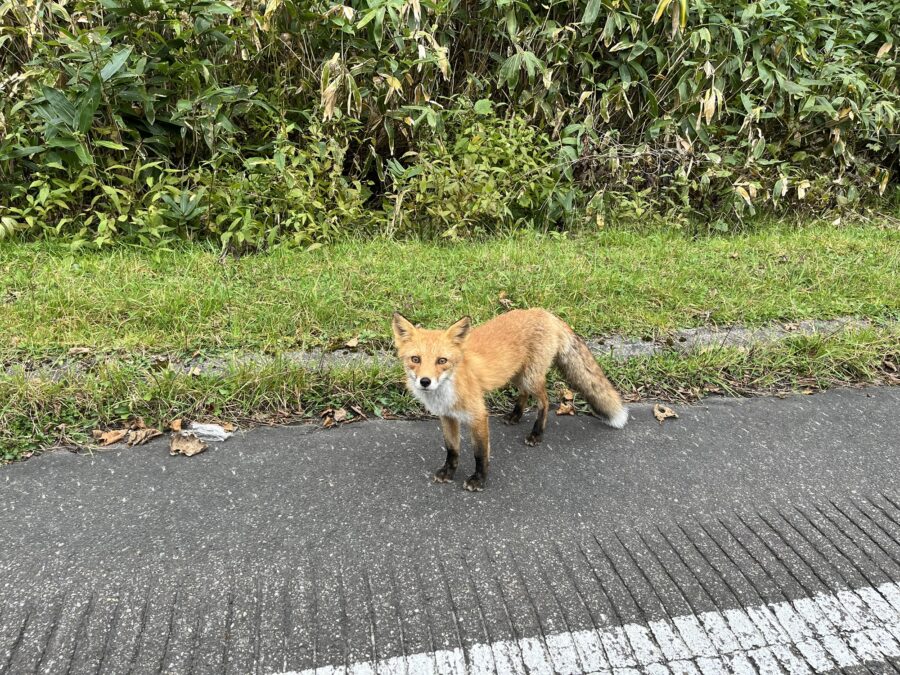
In the afternoon we travel from Shari to the coastal town Rausu. We pass a few Japanese tourists, eagerly taking photos on the Shiretoko Pass. As avid motorists, we enjoy driving its myriad hairpin bends and the way the changing landscape reveals its self to us with every new turn of the wheel. On one such bend we came to a screeching halt as a young fox cub ambled his way across the road. As we stopped, so did he, peering through the car window at us with rapt curiosity before slinking off into the trees.
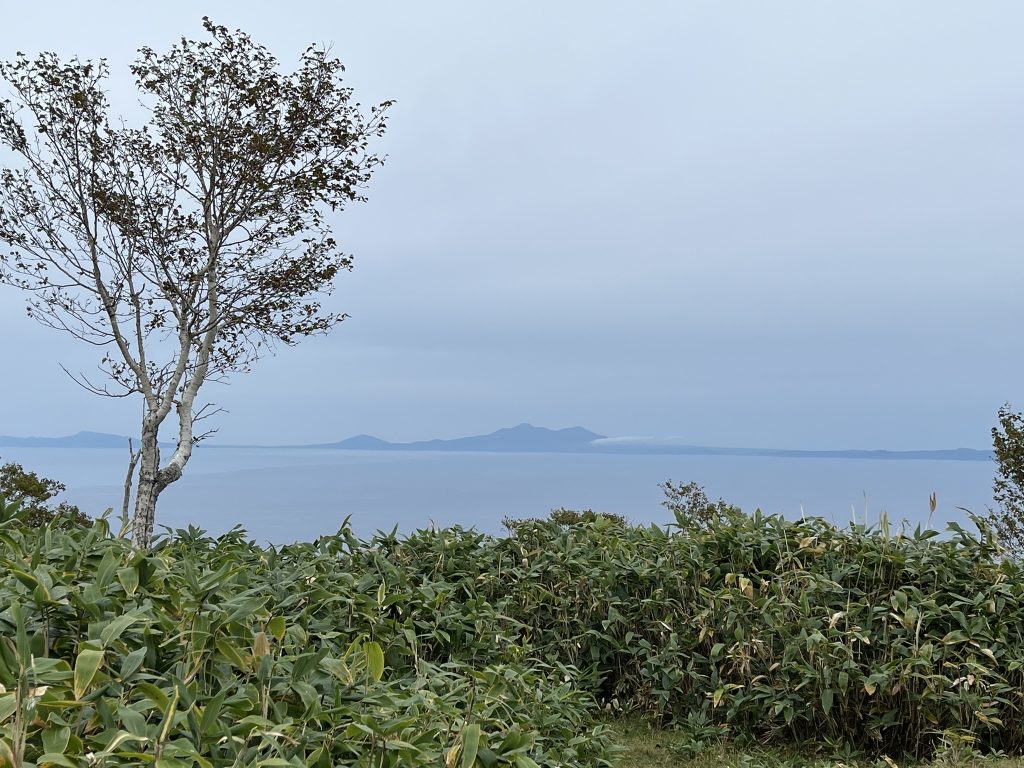
Parking up outside a school building on the outskirts of Rausu, we started up a heavily wooded trail toward the summit of Mount Eirei. As this was our last day of hiking in Hokkaido, we wanted to get one last glimpse of this fabulous place from a decent vantage point. Emerging onto the summit plateau the first thing to happen was a “PING!” from one of our backpacks. “Welcome to Russia” said the text message and looking out Eastwards it was easy to see why. Just across the short stretch of water in front of us lay Kunashir Island, the first in the Kurils series of Russian islands.
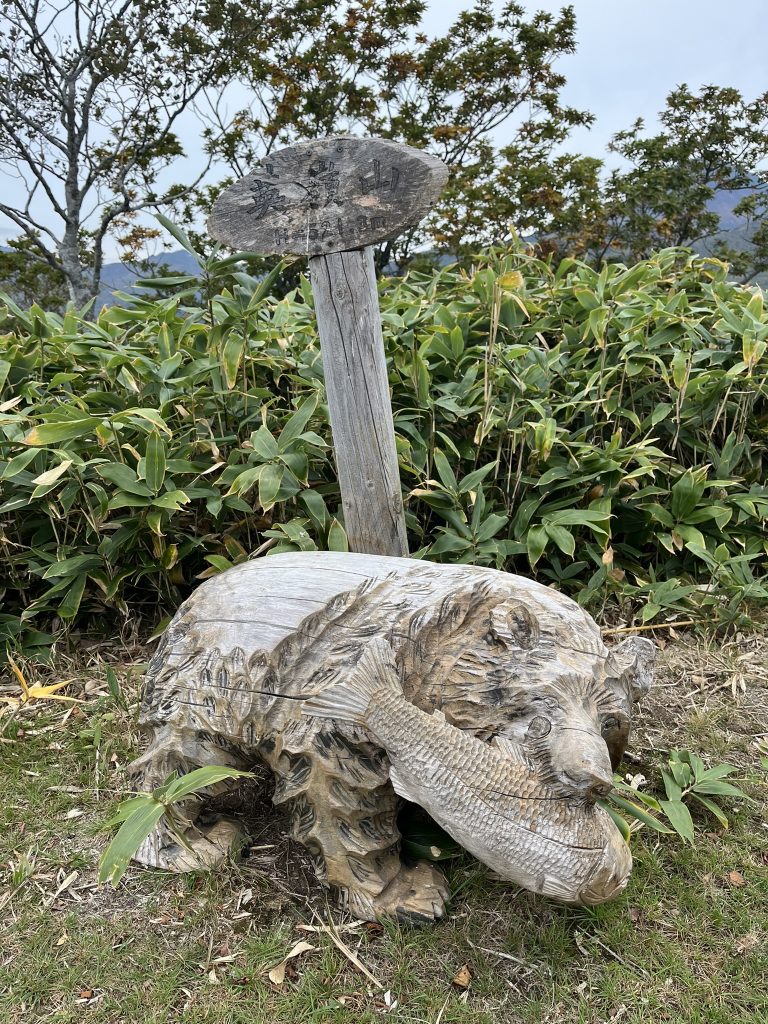
The summits of mountains in Japan often have quirky signs or local art works. Hokkaido and Shiretoko are no exception. Waiting for us at the top of Eirei was this stunning carving of a bear catching a fish. With bears and salmon both being incredibly prevalent in this area, it seemed a poignant way to finish off the last hike of our trip to the Shiretoko National Park.
We wake up bright and early on our final morning in Hokkaido to make the long drive back to the port of Hakodate. The roads are winding, offering delightful views of the scenery and we’re acutely reminded that it is in fact possible to spend a lot longer here; the urge to make return plans already bubbling before we’ve even departed.
While waiting for the ferry boarding to commence, we reflect over our fabulous time spent on the island; the people who have been unfailingly kind and generous to us, the stunning trails and landscapes that have kept us enthralled at all times and the fabulous weather that we have been afforded during our stay. As if in keeping with our feeling of time well spent, the sun emerges through a crack in the clouds, illuminating the sea and the ferry which will return us to the Japanese mainland, treating us to a truly spectacular sunset. All good things must come to an end, but it is precisely because they are ephemeral that we must live in the moment as often as possible – for it is here, like in the case of this sunset, where the magic happens.